Equally important are readers. The epaper’s interaction—dragging the corner of a digital page, toggling a night mode, or sharing an individual column—creates habits. A reader who once skimmed headlines might now linger, flipping back to earlier pages, discovering context they would have missed in a short feed. There is an aesthetic tension: to imitate paper is to risk being a mere simulacrum; to embrace digital is to risk losing the comforting structure that paper provides. The best epaper PHP scripts navigate this tension by borrowing the discipline of print—clear hierarchy, generous white space—while using the web’s strengths: hyperlinks, responsive images, and search.
Permanence matters. The web is notoriously fragile: links rot, formats evolve. A durable epaper approach includes export paths—PDFs, static HTML snapshots, or archival metadata—so that a story published today remains accessible tomorrow. Consider the small triumphs: the community newsletter that rallied volunteers after a storm, constructed and distributed within hours; the micro-journal that preserved oral histories by embedding audio alongside typed transcripts; the student paper that taught a class of teenagers how to shape a narrative and meet a deadline. Those are not grand revolutions but local revolutions—acts of making and sharing that compound into civic and cultural life. 7. The Future — Evolving Tools, Steadfast Purpose Technology moves fast, but the epaper’s purpose remains steady: to present coherent, curated content in a way that respects the reader. Future iterations may add collaborative editing in real time, AI-assisted layout suggestions, or richer multimedia embedding. Yet the most enduring versions will be the ones that keep asking the same question: how can we arrange words and images so that meaning travels cleanly from writer to reader? Closing Thought An epaper PHP script is more than a bundle of files on a server. It’s an idea about the ethics of presentation, the rituals of reading, and the small mechanics of civic life. It reminds us that publishing is not merely dispatching information; it is arranging attention—deciding what gets a headline, what gets a full spread, what gets archived. In that quiet decision-making lives the small revolution: shaping public life one readable page at a time.
Design choices also encode values. A clean serif for long reads, subtle animations for page turns, and a focus on legibility signal respect for the reader’s time. Conversely, cluttered sidebars and intrusive popups break the illusion and the trust. The script is thus not only a tool but a curatorial instrument. With the ability to publish comes responsibility. Epapers can democratize access—local reporting reaching diaspora communities, niche research becoming discoverable—but they can also propagate bias, misinformation, or ephemeral content. A simple PHP script can include versioning and archival features that favor transparency: author attributions, timestamps, and change logs. Implemented thoughtfully, those features turn each edition into a living document rather than a disposable artifact.
Note: To qualify for
Upgrade versions below you must
the Product Serial Number from the
Constructor version you own (v12- v15), and the name
it is registered to.
Constructor
16
Upgrade from v15
CM-100-16-UPG1
$199.00
Constructor
16
Upgrade from v14
CM-100-16-UPG2
$249.00
for Site License Upgrade Pricing. (Include
your current version Number)
Click photos below
for a Full Screen
Picture
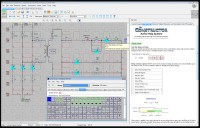
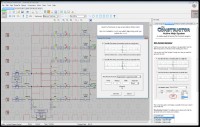
Picture of The Constructor
in the EDIT mode.
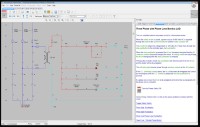
Picture of The Constructor in the
RUN
mode. Screen also shows an open
Workbook.
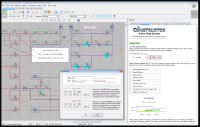
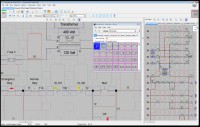
Picture of The Constructor with Open Time Delay Dialog
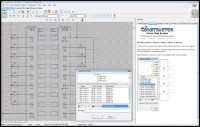
Picture of The Constructor
with PLC I/O and a load PLC I/O module
dialog box.
Picture of The Constructor
with wire generator screen.
Picture of The Constructor
with wire label screen open. It shows
wire numbers applied to a Brady label template.
The Constructor
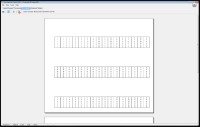
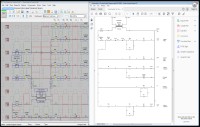
(PDF)
Export Preview Screen
The Constructor Zoom Screen
Epaper Php Script -
Electrical
Ladder Diagram, Schematic and PLC Training / Simulation Software
for Windows 11, 10, 8, 7
The Constructor
program makes the creation, testing, trouble-shooting, teaching and
printing of electrical ladder diagrams, schematics and one line diagrams
fast and easy.
Software will be Downloadable. A
short time after Purchase, an Email will be sent with Download Link and
License Key
The Constructor
Software is unique in it's ability to test an electrical circuit.
Now the
complete circuit can be tested from the three phase power components to
the control circuit. See and Hear the circuit running. The
built-in symbol libraries of over 720 symbols makes the creation of your
diagrams fast and easy.
We also have
optional libraries containing
over 1800 Allen Bradley, Automation Direct, Cutler Hammer, GE
Fanuc, Idec, Mitsubishi, Modicon, Omron, Siemens, Telemecanique
and Toshiba PLC I/O diagrams. - more
Create, Test and
Print Ladder Diagrams
The Constructor program makes the
creation, testing, trouble-shooting, teaching and printing of electrical
ladder diagrams, diagram schematics and one line diagrams fast and easy.
The circuit will perform the same as a hard wired electrical circuit.
The design can be edited and re-tested saving valuable time when it
comes to hard wired circuits and trouble-shooting scenarios. This
program is unique in its ability to test an electrical circuit. You can
see the power flow in the
diagram and hear the sound effects
when a motor or siren is energized. Once designed, any circuit can then
be virtually energized and
operated on your computer monitor.
The circuit simulator is a great teaching
tool. Our customers tell us the Constructor is the quickest and easiest
electrical cad software they've ever used.
The built-in symbol libraries of over 800
symbols makes the creation of your diagrams fast and easy. The built-in
symbol editor allows you to create your own custom electrical symbols
for that special project. Optional PLC I/O libraries are
available for most PLCs (Over 1800 I/O modules) An optional additional
sound library allows you to add 126 more sound effects to your circuit
diagrams.
Easy to Learn and
Use
Our new Active help system, help
files, and a pdf manual makes learning to use this powerful software
much faster and easier. Your complete
circuit can be tested, from the three phase power
components to the control circuit.
Many of our customers have used
electrical cad software before and comment about how easy our software
is to use compared with other electrical cad software.
All the Features
You Need
Powerful zooming features for
faster editing and easier viewing of your electrical diagrams. Over 50
color schemes allow you to set your personal color preference. Automatic
legends and borders allow you to make
professional looking electrical diagrams quickly. You
can print your ladder diagrams out on your choice of any printer or
plotter that Windows supports.
The diagram may be saved to your
hard drive, flashdrive or a floppy disk for easy reference or
modification. You can also save images from within The Constructor
program as bitmap files.
The bitmap files can then be used
for printing or imported into other programs.
Portability
If you need to send a diagram to an
associate now you can export your diagram as a PDF
file. Exporting your diagram as a
DXF, DWG, JPG, GIF, TIF or PNG file
is also an option. Print wire labels using
pre-designed wire label templates for Brady and other label
manufacturers. Our auto wire feature allows you to quickly add wire
numbers to your diagrams with a host of options available.
Optional Additions Available
Optional PLC I/O libraries are
available for most PLCs (Over 1800 I/O modules). An optional additional
sound library allows you to add 126 more sound effects to your circuit
diagrams.
CONSTRUCTOR
16
with Ladder Logic Simulation
NEW Features
Improved PDF and DXF Export
Improved installation for Windows 11.
More Symbols - now over 900 symbols
Enhanced/Faster method of doing assignments,
groups and associations in your diagram.
Enhanced/Faster method of drawing wires in
your diagram.
The probe now automatically changes from
continuity to power mode when either probe becomes in contact with
power
Automatic creation of PDF export symbols.
Virtually Energize and Operate Your Diagram
Works with Windows 7, 8 10 or 11.
Export features: PDF and DXF.
Change Wire Colors and Styles
Built-in Symbol Editor
Troubleshooting Mode for Training
Voltage/Continuity Test Probe
Built-in Symbol Libraries of over 900 JIC,
NEMA and IEC Symbols
Symbol Library Search
Sound Effects (Hear the Difference!)
Interactive on-screen help
Easier and faster to use than most CAD
Software
Generic PLC I/O modules and Terminal Strip
libraries
Automatic Wire Numbering and Re-numbering
Auto High-Lighting of Contacts Assigned to
Coils
Simulation Scripting - Run your circuit hands
free
Epaper Php Script -
Equally important are readers. The epaper’s interaction—dragging the corner of a digital page, toggling a night mode, or sharing an individual column—creates habits. A reader who once skimmed headlines might now linger, flipping back to earlier pages, discovering context they would have missed in a short feed. There is an aesthetic tension: to imitate paper is to risk being a mere simulacrum; to embrace digital is to risk losing the comforting structure that paper provides. The best epaper PHP scripts navigate this tension by borrowing the discipline of print—clear hierarchy, generous white space—while using the web’s strengths: hyperlinks, responsive images, and search.
Permanence matters. The web is notoriously fragile: links rot, formats evolve. A durable epaper approach includes export paths—PDFs, static HTML snapshots, or archival metadata—so that a story published today remains accessible tomorrow. Consider the small triumphs: the community newsletter that rallied volunteers after a storm, constructed and distributed within hours; the micro-journal that preserved oral histories by embedding audio alongside typed transcripts; the student paper that taught a class of teenagers how to shape a narrative and meet a deadline. Those are not grand revolutions but local revolutions—acts of making and sharing that compound into civic and cultural life. 7. The Future — Evolving Tools, Steadfast Purpose Technology moves fast, but the epaper’s purpose remains steady: to present coherent, curated content in a way that respects the reader. Future iterations may add collaborative editing in real time, AI-assisted layout suggestions, or richer multimedia embedding. Yet the most enduring versions will be the ones that keep asking the same question: how can we arrange words and images so that meaning travels cleanly from writer to reader? Closing Thought An epaper PHP script is more than a bundle of files on a server. It’s an idea about the ethics of presentation, the rituals of reading, and the small mechanics of civic life. It reminds us that publishing is not merely dispatching information; it is arranging attention—deciding what gets a headline, what gets a full spread, what gets archived. In that quiet decision-making lives the small revolution: shaping public life one readable page at a time. epaper php script
Design choices also encode values. A clean serif for long reads, subtle animations for page turns, and a focus on legibility signal respect for the reader’s time. Conversely, cluttered sidebars and intrusive popups break the illusion and the trust. The script is thus not only a tool but a curatorial instrument. With the ability to publish comes responsibility. Epapers can democratize access—local reporting reaching diaspora communities, niche research becoming discoverable—but they can also propagate bias, misinformation, or ephemeral content. A simple PHP script can include versioning and archival features that favor transparency: author attributions, timestamps, and change logs. Implemented thoughtfully, those features turn each edition into a living document rather than a disposable artifact. Equally important are readers
System Requirements
Minimum System Requirements
To run the Constructor, your computer system should meet the minimum
system requirements:
Windows 7, 8, 10 or 11 (32 or 64 Bit)
900 MHz processor
512 MB of Memory
100 MB of hard disk space
800 x 600 Display
Pointing Device: Mouse
Recommended System
For improved performance, the following computer system or greater is
recommended:
Order online:Add the item(s) to your shopping cart and
submit your order online through an encrypted secure
server.Major Credit Cards and PayPal are
accepted.
Order offline:Print an
offline order form
and Mail or Fax your order to us.


 Order online:
 Add
Add  Order offline:
