




Slide image

Games Pkg Ps3: [best]

Tired of poor working conditions, low wages and no support? You don't have to go it alone.

Join SGEU Today
Slide image

Games Pkg Ps3: [best]

Reach out for Help.

Learn More
Slide image

Games Pkg Ps3: [best]

Join our team that supports Saskatchewan workers

Apply today
Slide image

Games Pkg Ps3: [best]

Learn More
Slide image

Games Pkg Ps3: [best]

Open to SGEU members, staff, and their dependants

Apply today

News

games pkg ps3

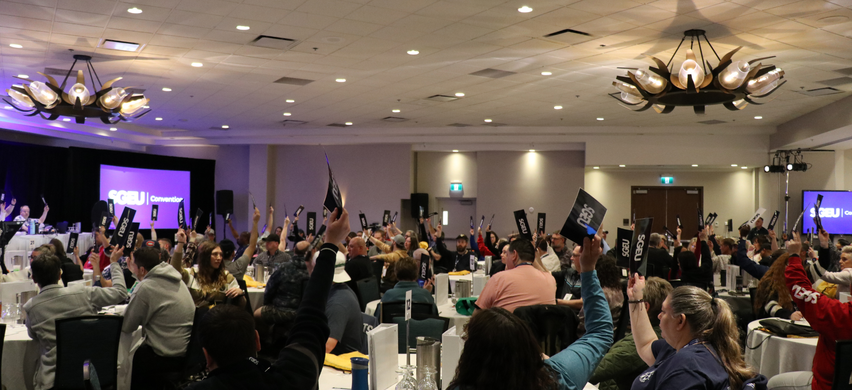
2026 Convention Election Results

Games Pkg Ps3: [best]

A voice, neither male nor female, guided him in clipped, comforting narration: “Find what was left behind. The story only tells itself if you listen.”

Now the unlabeled disc had stitched itself back together out of other players’ saved snippets—strangers who had once found a piece of the project and added their own: a laugh, a remembered street, a song hummed on a commuter train. The game had evolved, a communal patchwork of memory. Marcus stepped back from the screen, suddenly aware he was both inside and outside the thing, a player and also a piece.

Marcus found the cardboard box behind a thrift-store shelf like a small buried treasure: weathered, taped, and labeled in thick marker, “games pkg PS3.” He carried it home like contraband, imagining the ghosts of digital worlds rattling inside. games pkg ps3

With each recollection, players in the town—neighbors, a teenage delivery driver with a band tee, an elderly man who smelled of rosemary—would pause, looking toward Marcus’s avatar with an expression that blinked between recognition and sorrow. When Marcus returned an object to its rightful place—a photograph to the mantel, the ticket stub to inside a coat pocket—the town shifted: a streetlight would glow steadier, a bakery would open its door, and a small, quiet happiness spread like a tide into the game’s world.

He booted up the old PlayStation 3 he’d kept in the closet because some consoles, he believed, were more like time machines than electronics. The console hummed to life. Marcus slid the labeled discs in one by one. The horror game’s save file held a single, cryptic message: “Don’t trust the lighthouse.” The racer’s last ghost lap spun a perfect, impossible line around a coastal track. The indie platformer opened with a hand-drawn world of stitched clouds and a protagonist who collected memories like coins. A voice, neither male nor female, guided him

The game never told him why. It offered only fragments and the steady insistence to “remember.” In a small seaside house at the edge of the map, under the lighthouse that refused to shine predictably, Marcus found an old journal. Its pages were blank until he clicked the right button; then ink flowed, and sentences formed themselves—lines that matched thoughts he’d had but never voiced, confessions about fears and forgiveness he’d never uttered out loud. The journal’s last entry read: “We hide things in games so arrival feels earned.”

He set the box on his kitchen table and peeled back the tape. Discs winked up at him—an odd, imperfect collection: a gritty survival-horror title with a cracked spine, a neon racing game still smelling faintly of someone else’s cologne, a quirky indie platformer with a sticker that read “PLAY ME FIRST,” and, tucked beneath them all, a plain black disc with no label. Marcus stepped back from the screen, suddenly aware

In the final hour, the lighthouse’s beam flared steady for the first time. The town gathered—faces he’d restored, strangers who had become fixtures—and the voice gave him a choice: keep the memories in the game, a perfect, locked archive, or let them go, allowing the town—and himself—to move forward.


Read Article

Events

May 12, 2026
Learning Development

We regret to inform you that this course has been postponed at this time. We apologize for any…

May 14, 2026
Learning Development

We regret to inform you that this course has been postponed at this time. We apologize for any…

May 17, 2026
Recognition Dates

International Day Against Homophobia, Biphobia and Transphobia The International Day Against…

Campaigns

Sign on to Pharmacare

Sign on to Pharmacare

Sign on to Pharmacare is a campaign brought to you by the Saskatchewan Health Coalition. SGEU is a member of the Saskatchewan Health Coalition. The recent introduction of Bill C-64, also known as the Pharmacare Act, is an encouraging first…

Read Article
Speak Up Saskatchewan

Speak Up Saskatchewan

Speak up Saskatchewan is a campaign brought to you by the Saskatchewan Federation of Labour. Regular people keep Saskatchewan moving forward and help our communities thrive.  But, for too long now, Saskatchewan families like yours…

Read Article

Benefits of

Belonging To SGEU

When you join SGEU, you’re not alone. You'll have 20,000 members and professional staff in your corner. We'll work with you and your colleagues to make sure workers are treated fairly and everyone benefits. You’ll be protected, and the whole team’s relationship will improve.

A voice, neither male nor female, guided him in clipped, comforting narration: “Find what was left behind. The story only tells itself if you listen.”

Now the unlabeled disc had stitched itself back together out of other players’ saved snippets—strangers who had once found a piece of the project and added their own: a laugh, a remembered street, a song hummed on a commuter train. The game had evolved, a communal patchwork of memory. Marcus stepped back from the screen, suddenly aware he was both inside and outside the thing, a player and also a piece.

Marcus found the cardboard box behind a thrift-store shelf like a small buried treasure: weathered, taped, and labeled in thick marker, “games pkg PS3.” He carried it home like contraband, imagining the ghosts of digital worlds rattling inside.

With each recollection, players in the town—neighbors, a teenage delivery driver with a band tee, an elderly man who smelled of rosemary—would pause, looking toward Marcus’s avatar with an expression that blinked between recognition and sorrow. When Marcus returned an object to its rightful place—a photograph to the mantel, the ticket stub to inside a coat pocket—the town shifted: a streetlight would glow steadier, a bakery would open its door, and a small, quiet happiness spread like a tide into the game’s world.

He booted up the old PlayStation 3 he’d kept in the closet because some consoles, he believed, were more like time machines than electronics. The console hummed to life. Marcus slid the labeled discs in one by one. The horror game’s save file held a single, cryptic message: “Don’t trust the lighthouse.” The racer’s last ghost lap spun a perfect, impossible line around a coastal track. The indie platformer opened with a hand-drawn world of stitched clouds and a protagonist who collected memories like coins.

The game never told him why. It offered only fragments and the steady insistence to “remember.” In a small seaside house at the edge of the map, under the lighthouse that refused to shine predictably, Marcus found an old journal. Its pages were blank until he clicked the right button; then ink flowed, and sentences formed themselves—lines that matched thoughts he’d had but never voiced, confessions about fears and forgiveness he’d never uttered out loud. The journal’s last entry read: “We hide things in games so arrival feels earned.”

He set the box on his kitchen table and peeled back the tape. Discs winked up at him—an odd, imperfect collection: a gritty survival-horror title with a cracked spine, a neon racing game still smelling faintly of someone else’s cologne, a quirky indie platformer with a sticker that read “PLAY ME FIRST,” and, tucked beneath them all, a plain black disc with no label.

In the final hour, the lighthouse’s beam flared steady for the first time. The town gathered—faces he’d restored, strangers who had become fixtures—and the voice gave him a choice: keep the memories in the game, a perfect, locked archive, or let them go, allowing the town—and himself—to move forward.