For instance, when a user flashes a custom ROM using Odin, they are modifying the device's firmware to run a new operating system or software configuration. This process involves rewriting the device's ROM, which, in turn, affects the device's communication protocols, including GSM.
Odin is a popular software tool used to flash, or install, firmware and ROMs on Samsung mobile devices. Developed by Samsung, Odin is a Windows-based application that enables users to connect their device to a computer and transfer firmware packages, kernels, and other software components. gsmromnet odin
ROM, or Read-Only Memory, refers to the non-volatile memory storage in mobile devices that contains the device's firmware, operating system, and applications. In essence, ROM is the brain of the operation, controlling the device's hardware components and enabling them to interact with each other. For instance, when a user flashes a custom
At its core, GSM is a Time Division Multiple Access (TDMA) technology, which allows multiple users to share the same frequency band by dividing the signal into time slots. This enables efficient use of bandwidth and minimizes interference between signals. GSM operates on a range of frequency bands, including 850 MHz, 900 MHz, 1800 MHz, and 1900 MHz, which are allocated by regulatory bodies in different regions. Developed by Samsung, Odin is a Windows-based application
GSM, or Global System for Mobile Communications, is a standard for 2G digital cellular networks used by mobile devices such as mobile phones and tablets. Developed in the 1980s, GSM has become the most widely used standard for mobile communication, with over 90% of the world's mobile market using GSM technology. This standard enables mobile devices to communicate with each other and with the cellular network, facilitating voice calls, text messages, and data transmission.

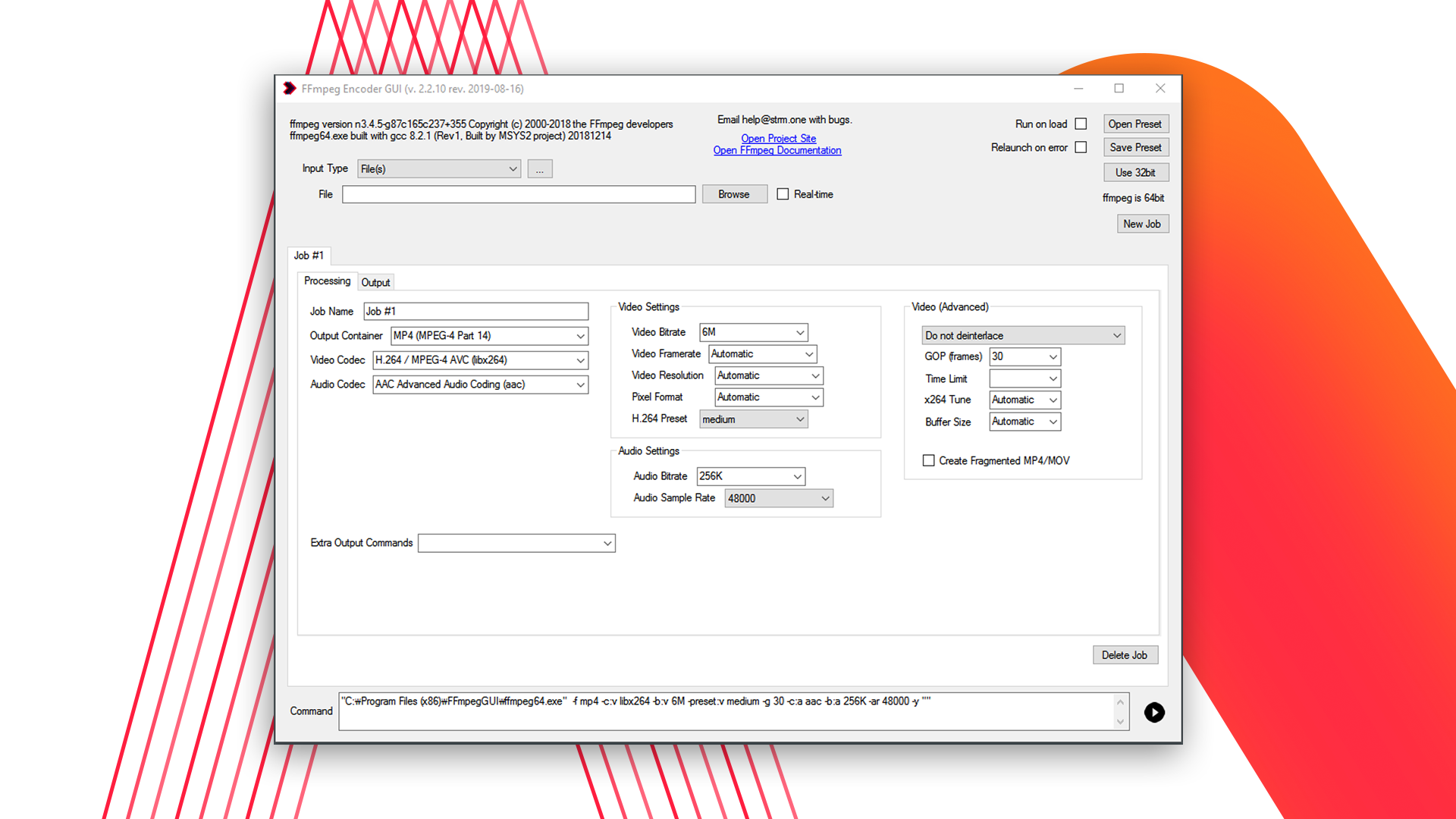
FFmpegGUI currently supports File, DirectShow, Blackmagic Decklink, NewTek NDI or URL inputs.
Drag and drop your file(s) from your system to be processed quickly.
Prompting to rename any input file(s) with non-ASCII filenames to be compatible with command-line processor.
You can easily export your clip(s) to a file, NewTek NDI destination, RTMP server or any other custom output supported by FFmpeg.
The included FFmpeg is built with hardware encoding support for NVENC. GUI support is experimental at this time, feedback is welcome.
32-bit and 64-bit Windows binaries of FFmpeg included. Current binaries are based on version 3.4.5.
Save your encoding settings as file to be recalled later. Settings are formatted as an XML document.
GUI project is developed by ffmpeg fans and distributed for any usage. Non-free codecs in the included FFmpeg build may have further restrictions.
For instance, when a user flashes a custom ROM using Odin, they are modifying the device's firmware to run a new operating system or software configuration. This process involves rewriting the device's ROM, which, in turn, affects the device's communication protocols, including GSM.
Odin is a popular software tool used to flash, or install, firmware and ROMs on Samsung mobile devices. Developed by Samsung, Odin is a Windows-based application that enables users to connect their device to a computer and transfer firmware packages, kernels, and other software components.
ROM, or Read-Only Memory, refers to the non-volatile memory storage in mobile devices that contains the device's firmware, operating system, and applications. In essence, ROM is the brain of the operation, controlling the device's hardware components and enabling them to interact with each other.
At its core, GSM is a Time Division Multiple Access (TDMA) technology, which allows multiple users to share the same frequency band by dividing the signal into time slots. This enables efficient use of bandwidth and minimizes interference between signals. GSM operates on a range of frequency bands, including 850 MHz, 900 MHz, 1800 MHz, and 1900 MHz, which are allocated by regulatory bodies in different regions.
GSM, or Global System for Mobile Communications, is a standard for 2G digital cellular networks used by mobile devices such as mobile phones and tablets. Developed in the 1980s, GSM has become the most widely used standard for mobile communication, with over 90% of the world's mobile market using GSM technology. This standard enables mobile devices to communicate with each other and with the cellular network, facilitating voice calls, text messages, and data transmission.