Happy Models.eu Work May 2026
The world’s most comprehensive materials database

Total Materia is a product of Key to Metals AG
Total Materia is a product of Key to Metals AG
Success brought its own tests. Conversations about scale exposed the tension between ethos and growth. How do you preserve cooperative governance when demand outpaces capacity? How do you reconcile fair pay and labor protections with the bottom-line pressures of a competitive market? Happy Models.eu chose cautious expansion: they formalized a member-elected board, codified their pay scales to prevent undercutting, and created partnerships with small brands aligned to their values. They refused to accept venture capital that demanded rapid monetization and instead pursued a mixed funding approach—membership fees that remained affordable, service charges, and grants aimed at creative labor rights. By design, they embraced slow growth.
The platform side—Viktor’s contribution—was designed to flatten common asymmetries between talent and clients. Instead of opaque ranking systems and algorithmic gatekeepers, the site emphasized portfolios that told stories: short videos of movement, behind-the-scenes journals, notes about comfort zones and triggers, and clear pricing that accounted for usage, time, and rights. Clients booking through the platform had to commit to a code of conduct and transparent usage terms before a booking could be finalized. That procedural friction felt purposeful: it discouraged clients seeking to exploit loopholes and attracted collaborators who respected the craft. Happy Models.eu
The narrative that surrounds Happy Models.eu resists tidy endings because it is ongoing. Organizations that try to transform culture rarely succeed overnight; instead, they accumulate influence through iteration. Happy Models.eu’s story is one of many small institutional acts that, when aggregated, begin to alter expectations. It is not a utopia—fashions change, economies strain, individuals still encounter hardship—but it has created a set of tools, precedents, and lived experiences that others can emulate, adapt, and improve. Success brought its own tests
Happy Models.eu began as an argument between two friends—Maya, a former model who had grown tired of being reduced to measurements and moodsheets, and Viktor, a small-scale web developer who loved photography and hated waste. They met in a cafe where rain drummed on the awning and the conversation turned, as it so often did, to the absurdities of their industries. "What if," Maya said, stirring her espresso, "there were a place that centered models as collaborators? A place that offered training, fair contracts, and real creative input?" Viktor grinned. "And what if it was also a marketplace where photographers, stylists, and brands could discover talent without the usual grind?" How do you reconcile fair pay and labor
Within months, hobbyist energy metamorphosed into a plan. They sketched bylaws on napkins, recruited a small advisory group of industry outsiders—an independent stylist, a union organizer, a freelance makeup artist—then turned to the practical work that makes visions real: contracts, a website, a studio lease, a seed fund raised from friends and sympathetic collaborators. Happy Models.eu launched with a manifesto: dignity, transparency, and creative agency. It read like a promise and a dare.
If there’s a single reason Happy Models.eu mattered beyond its immediate members, it’s this: it reframed what the industry could be by demonstrating that humane practices are also good business. When people are treated as collaborators—paid fairly, given agency, and supported—the quality of work rises. The photographs become more honest, the collaborations more enduring, and the creative community more sustainable.
The platform’s challenges persisted. Legal regimes in different countries complicated licensing norms and worker protections. There were debates within the membership about which commercial partnerships were compatible with their values. Technology costs—secure payments, moderated messaging, scheduling systems—added burdens. But each obstacle prompted pragmatic adjustments: targeted legal partnerships to handle cross-border contracts, clearer conflict-resolution pathways, and a technology roadmap that prioritized privacy and accessibility.

Send your technical questions to our experts!
Connect you with an EnginSoft expert who can provide a reliable answer to your technical question or recommend a
proven solution.

CASE STUDY
This technical article describes how high-end numerical Computational Fluid Dynamics (CFD) simulations were applied to mimic the realistic operating conditions of a Ventricular Assist Device (VADs) and analyze its hemodynamics in order to identify potential areas for optimization of the device’s performance, safety and efficacy.
ansys cfd biomechanics
CASE STUDY
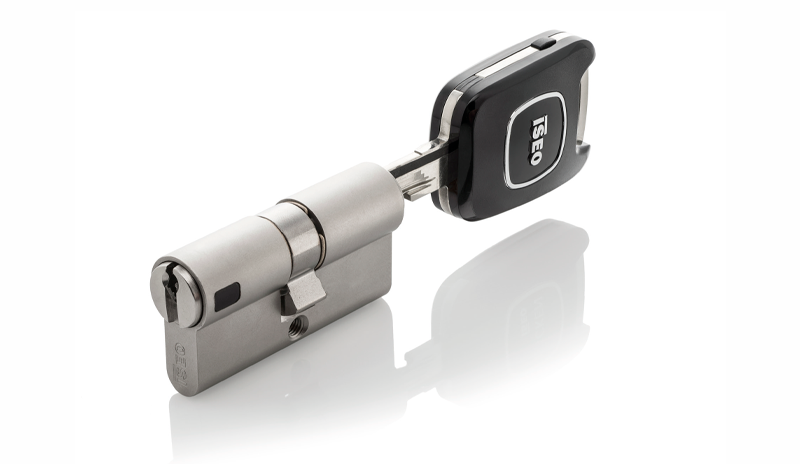
This case study describes ISEO’s project to introduce a global dimensional management approach based on CETOL6σ that starts from the product concept phase and includes design development and prototyping and extends on to cover all other phases of production through to the finished product, with the guidance and support of EnginSoft.
tolerances cetol mechanics

CASE STUDY
This article describes how the company created and tested a process to construct a parametric CAD model capable of providing its designers with a starting point for any new machine to be designed.
mechanics ansys modefrontier maplesim maple
CASE STUDY
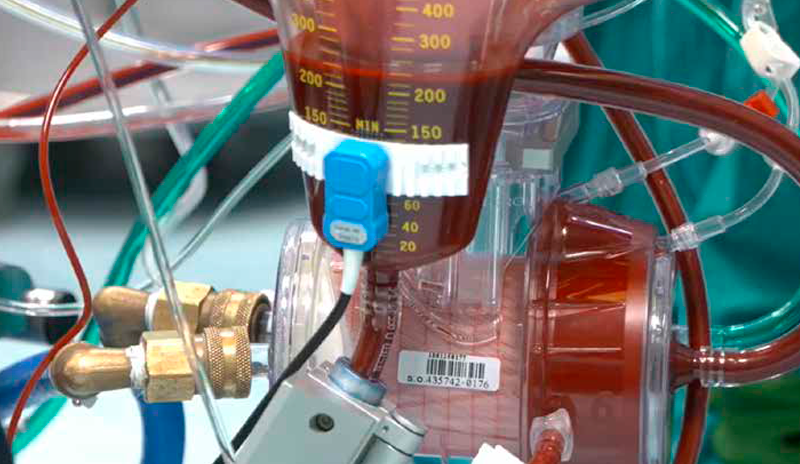
The study described in this article was designed to obtain greater insight into the gas transfer mechanism at microscopic scale using computational fluid dynamics in order to accelerate design exploration to find the optimal solution.
biomechanics ansys
CASE STUDY
Have you ever grappled with the nonlinearity of materials? This article introduces Multiscale.Sim’s curve-fitting feature for predicting material constants for viscoelastic problems.
multiscale mechanics composites
