Jiorockers Com Tamil |top|
When he played a mangled archive of a 1990s melody, his grandmother, passing by the living room, stopped mid-step. “Where did you get this?” she asked, voice softening. Arjun showed her the screen, and for a moment the cluttered thumbnails dimmed and all he could see was her face smooth with recognition. She hummed along to words she hadn’t sung in twenty years, and the apartment filled with a language that had been patient enough to wait for them.
Over coffee, she told him stories: of Sunday matinees, of songs that stitched neighborhoods together, of a youth spent waiting outside theatres for posters to come down. Arjun realized jiorockers com tamil—whatever it was legally or technically—had opened a door to stories living inside his family. He began saving links not to hoard movies but to preserve a soundtrack for conversations he wanted to have.
He spent an hour—then three—collecting fragments: a recording of a festival performance that made his palms sweat, an interview clip of an obscure composer explaining how rain influenced his chords, a bootleg of a late-night radio show where callers confessed love to songs instead of people. Each file carried small imperfections: pops, missing frames, subtitles that mistranslated idioms. Those flaws made everything more human. It felt less like pirated content and more like a community trading memories.
Later, he messaged a friend who ran a small, legitimate archive of Tamil radio shows. She frowned at the link—“lots of grey areas there,” she warned—but she also admitted she’d found rare gems in unexpected places. Together they curated a playlist of restored recordings, reached out to a composer’s grandson for permission to repost one faded interview, and wrote short notes about provenance and respect. The work felt like mending: turning scattered, fragile files into something that could be shared openly and ethically.
In the end, the phrase jiorockers com tamil was less a site than a spark. It nudged Arjun toward a responsibility he hadn’t known he had—one that honored both the music and the people who made it meaningful. The narrative it unlocked was not just about accessing songs; it was about recognizing the cultural threads those songs carried and deciding to keep them alive, carefully and kindly, for the next person who clicked a curious link.
Arjun found the link bookmarked at the bottom of an old forum thread—jiorockers com tamil—typed in a way that made him pause. It looked like another anonymous portal to the endless river of Tamil cinema: songs, dubbed films, and the odd behind-the-scenes clip fans swore only surfaced there. He hesitated, remembering his grandmother’s warning about chasing things that seemed too easy, then tapped the link out of curiosity more than intent.
Here’s a short, natural-tone narrative featuring the phrase "jiorockers com tamil" in a noteworthy way.
How to Install Windows® 10 To A GUID Partition Table (GPT)
Properly Install Windows® 10 on Your Storage Disk With UEFI Enabled In The System BIOS And The GPT (GUID Partition Table) Created
Summary
We recommend performing Windows® 10 installations enabling UEFI with a GUID Partition Table (GPT).
Some features may not be available if you use the Master Boot Record (MBR) style partition table.
Configure a system to install an OS to a GUID Partition Table (GPT) partition jiorockers com tamil
| Note |
- We highly recommended performing a backup of your data. If you have a second disk drive with enough available capacity, you can create a system image and recover the full installation as it was before you started this procedure.
- Screenshots and directions below are examples. Consult with your motherboard or system manufacturer for specific BIOS instructions.
|
- Connect a USB Windows® 10 UEFI install key
- Boot the system into the BIOS (for example, using "F2" or the "Delete" key)
- Locate the "Boot Options Menu"
- Set Launch CSM to "Enabled." If CSM is set to "Disabled," you can skip to step 8 below
- Set Boot Device Control to "UEFI Only"
- Set Boot from Storage Devices to UEFI driver first
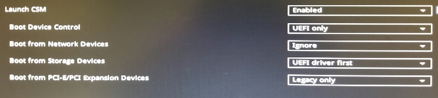
- Save your changes and restart the system.
- Reenter the BIOS (for example, using "F2" or the "Delete" key).
- Confirm in the Boot Priority List that the "USB UEFI OS Boot" option is at the top of the list.
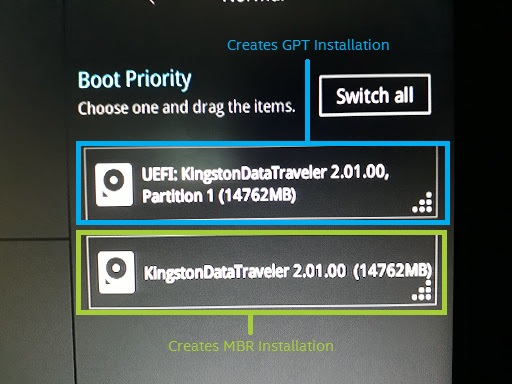
- Reboot the system and install Windows* as usual.
Confirm that Windows* is installed to a GPT partition.
- Boot into Windows*
- Open Disk Manager (For Windows® 10, press the "Windows*" key and the "X" key simultaneously, then click "Disk Manager"). You see three partitions including the EFI System Partition.
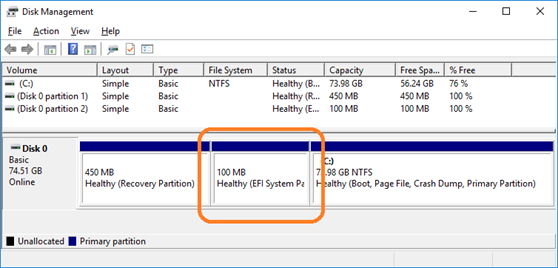
3. Right-click the disk shown as (Disk x, Basic, Capacity, Online) on the left
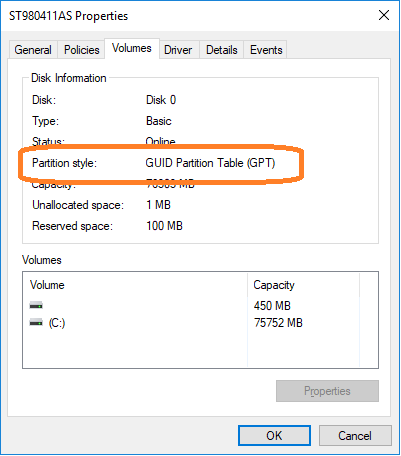
4. Select "Properties"
5. Click the "Volumes" tab. Here you can confirm the "Partition style".
Questions? Check out our Community Forum for help. When he played a mangled archive of a
Issues? Contact Solidigm™ Customer Support:
[Chinese] [English] [German] [Japanese] [Korean]
When he played a mangled archive of a 1990s melody, his grandmother, passing by the living room, stopped mid-step. “Where did you get this?” she asked, voice softening. Arjun showed her the screen, and for a moment the cluttered thumbnails dimmed and all he could see was her face smooth with recognition. She hummed along to words she hadn’t sung in twenty years, and the apartment filled with a language that had been patient enough to wait for them.
Over coffee, she told him stories: of Sunday matinees, of songs that stitched neighborhoods together, of a youth spent waiting outside theatres for posters to come down. Arjun realized jiorockers com tamil—whatever it was legally or technically—had opened a door to stories living inside his family. He began saving links not to hoard movies but to preserve a soundtrack for conversations he wanted to have.
He spent an hour—then three—collecting fragments: a recording of a festival performance that made his palms sweat, an interview clip of an obscure composer explaining how rain influenced his chords, a bootleg of a late-night radio show where callers confessed love to songs instead of people. Each file carried small imperfections: pops, missing frames, subtitles that mistranslated idioms. Those flaws made everything more human. It felt less like pirated content and more like a community trading memories.
Later, he messaged a friend who ran a small, legitimate archive of Tamil radio shows. She frowned at the link—“lots of grey areas there,” she warned—but she also admitted she’d found rare gems in unexpected places. Together they curated a playlist of restored recordings, reached out to a composer’s grandson for permission to repost one faded interview, and wrote short notes about provenance and respect. The work felt like mending: turning scattered, fragile files into something that could be shared openly and ethically.
In the end, the phrase jiorockers com tamil was less a site than a spark. It nudged Arjun toward a responsibility he hadn’t known he had—one that honored both the music and the people who made it meaningful. The narrative it unlocked was not just about accessing songs; it was about recognizing the cultural threads those songs carried and deciding to keep them alive, carefully and kindly, for the next person who clicked a curious link.
Arjun found the link bookmarked at the bottom of an old forum thread—jiorockers com tamil—typed in a way that made him pause. It looked like another anonymous portal to the endless river of Tamil cinema: songs, dubbed films, and the odd behind-the-scenes clip fans swore only surfaced there. He hesitated, remembering his grandmother’s warning about chasing things that seemed too easy, then tapped the link out of curiosity more than intent.
Here’s a short, natural-tone narrative featuring the phrase "jiorockers com tamil" in a noteworthy way.